thanksgiving 2911497 640

Thanksgiving 2020 – A unique celebration for an extraordinary year

Each year around this time, we seek to express our gratitude for the blessings we may count as ours.  But this year, Thanksgiving seems to me to be especially important.

As a celebration of our blessings, Thanksgiving also carries an inherent sense of hope, not just gratitude.  Being grateful for our current circumstances, including most certainly family and friends who contribute meaning to our lives, we also celebrate hope—hope that life will not only continue to bless us with what we have, but also bring us better days.

I don’t know anyone who has not been touched by the current pandemic, whether themselves, their families or their friends.  Each of us knows someone, or knows of someone, within our circle who have lost a family member recently because of the virus.  Because this virus is unpredictable in how it manifests itself, we are all being asked to limit our celebrations to our immediate family with whom we have implemented some sort of bubble.  

Perhaps more than any other year, this celebration can certainly have more meaning.  Some of us may still be dealing with the loss of family or close friends.  But we can still be thankful for having had that family member or friend in our lives as we celebrate with, and are grateful for, those that are still here.

Whatever our circumstances, we can create a new tradition as we celebrate in a safe manner with the hope that we may celebrate with abandon next year.

Personally, I am grateful for not just my family and friends, but for the opportunity to meet new people every day through my work.

I wish you and your family a wonderful Thanksgiving Day celebration.

CDC Guidelines for a safe Thanksgiving Celebration

Some Good Things Coming Out of Covid-19 & Update on Divorce Court Proceedings

While most of what we are seeing in the news is about the negative impact of Covid-19 on our daily lives, there are areas that are also improving.  This is fortunate for us because it provides us a safe harbor to bring a certain normalcy back into our lives, however each of us defines that. It also shows us there is a lot we can still control.

Strengthen/Maintain Family & Friendship Ties

Many of us understand at a deep level the importance of maintaining our family ties.  But we also know that demands on our time from work, children’s extracurricular activities, and an assortment of interesting activities or opportunities can sometimes make it difficult to deepen those ties.  One thing is to absentmindedly interact with our families as we rush in from work, hurrying to make the family dinner or help a child with their schoolwork. Quite another is to be already home, if you are fortunate to work from home; or to have the children already home, if you don’t.  Both situations afford us the opportunity to slow down, as there are no other activities available to rush to next at the end of your day..

Personally, I’m enjoying more time with my brother and his family who live further away from me.  Because my elderly parents and I fall into an at-risk category, we have been able to have regular family events, which include my brother and his family.  We all limit where we go and with whom we come into contact outside this group, and always wear masks.

Finding new ways to spend this family time together or rediscovering old ones can also lead us to getting even closer to our family, beyond the routine things we used to do together.  We can resurrect old games like doing puzzles together, sharing simple cooking tasks with our children; and (at least in Florida, every day), the old past time of I Spy in the Sky (cloud gazing).  None of these activities involves fancy gadgets or spending money, but they go a long way in sharing time together in a different way.  My favorite pastime at the moment is puzzles, the more pieces the better.

Maintaining friendships may be a little harder while maintaining social distance.  But here too there are opportunities: longer phone calls or video calls (Zoom, Facetime, WhatsApp, etc); maybe a socially-distanced walk at a park or backyard picnic if you know your friends are also taking care to be safe on their own.

Opportunities to Slow Down

According to this USA Today article, FOMO, or the fear of missing out, is still out there, but in a quarantine version and easily triggered by social media.  An expert quoted in the article talks about FOMO for what 2020 could have meant for us if there had been no virus.  I’m not a fan of crying over spilled milk so I’m not likely to entertain FOMO as to all the traveling I will not be doing next year—there’s always the possibility of taking road trips here at home.

We obviously can control how much digital media we consume that doesn’t help us have an IRL (in real life) experience that is not particularly  meaningful to us.  And IRL is all that counts.  

Now we can get a new hobby or re-discover an old one, dedicate time to things we may have been interested in before, like cooking, gardening, birdwatching, reading more books (digital or real books).  I’m currently into small DIY home improvements, but running out of opportunities—there’s only so much painting and what-not that I can do without it just being busywork.

We can pick an activity and incorporate it into our new routine, especially if you can do it outside.  Research shows that spending time outside is good for us in terms of our health and psychological well-being.  According to the study, as little as 120 minutes spread out over a week provides benefit, so there is no need to become a weekend warrior when you can spread it over a week.

There’s always more sleep!  We certainly can sneak in some naps or late rising in there.

These two areas provide us a lot of room to feel safe and gain a measure of control of our daily lives, while at the same time giving us the opportunity to bring enjoyment as we go along.

Update on Divorce Court Proceedings

Those of us who practice family and attend some judicial panels are learning that we will probably not be back in person in court for the remainder of the year.  The court buildings will remain closed.

Even after that, there are some new procedures that will remain electronic.  It doesn’t see  as if uncontested divorces will be going back to in-person hearings.  Instead they will continue to be purely electronic documents, with no hearing on the web.

Motion calendars, which are events for 5-minute legal arguments in cases, will probably continue as zoom hearings for judges who elect to do it this way.

I’m finding out that clients who want an uncontested divorce without having to go to court are enjoying how fast the process is without having to drive to court, or deal with technology with which they are not familiar.


For free, downloadable resources about divorce, paternity and domestic violence, visit the free family download page (no email required, just click and get a pdf)

Covid-19 divorce

How Covid-19 is Changing How Family Court Works

Since the pandemic shutdown in early March, the Florida Judicial System has been able to transition in such a way that cases continue to progress through the system in (mostly) an orderly manner. As part of the Florida Judicial System, the Miami Family Court is closed for most civil hearings, like divorce, paternity and non-criminal domestic violence cases. 

Instead, hearings on cases take place using video over the internet.  The most important benefit of using this electronic system is, of course, safety for you, judges, attorneys, court staff and clerks, and all those you would encounter on your way to a hearing in court.  Secondary but huge benefits include saving time in traveling to court as well as not having to take off from work to attend hearings.

Getting a Divorce

If you are considering getting a divorce, you still have the option of doing so in either a contested or an uncontested divorce.  You benefit the most from the new technology if you and your spouse are able to agree to get an uncontested divorce.  In this instance, you will not need to attend hearings either in person or electronically because you essentially are getting your divorce online, from beginning to end.

If you and your spouse are unable to agree so that your divorce is uncontested, then your divorce will still take place as a contested divorce using video hearings.  You will still have to face the longer time frame of contested divorces, and the same expenses such a court reporters, translators (if necessary), etc.

Establishing Paternity

Just like a divorce, paternity cases can be done in an uncontested or contested manner.  Uncontested paternity cases in Miami are done in the same manner as the uncontested divorces.  Similarly, if your paternity case is contested, you face the same issues as if you were getting a contested divorce.

Family Court Services

Our Family Division has a great unit that provide support in family and paternity cases, Family Court Services.  Judges refer divorce cases with children and paternity cases to Family Court Services when the parties and their children need additional services that will support the wellbeing of the family and the resolution of the case. 

Services provided through Family Court Services include crisis assistance, co-parenting, parenting coordination, resolution of time-sharing issues or schedules, referrals for family counseling, individual counseling for children or for children with their parents, supervised visitation and many more.  Many if not all of these services are already being provided through video or telephonic conferences.

Mediation in Family Cases

The In-House Mediation Unit in Miami-Dade County has a designated section for mediating Family Cases.  If your case is going to trial, whether a divorce trial or a paternity trial, you will be required to mediate before the trial.

Perhaps mediation was one of the first proceedings to transition to video. My first video mediation was on March 20, 2020; it was effective and efficient.

In Miami-Dade, mediation in the In-House Unit have been taking place since almost the start of court closure, back on March 16, 2020.  Private mediators seamlessly transitioned into video mediation.

Keeping Up On Covid-19 Measures for Court

You can keep track of Covid-19 related orders and announcements for the Eleventh Judicial Circuit on their Court Covid-19 page.

For questions about divorce, paternity or any other family issue, feel free to contact me at 305-710-9419 or via email.

You can also visit Getting Your Divorce Done Completely Online if your divorce is uncontested.  If your divorce or paternity case seems to be contested or if you have any questions, you can request a case assessment session.

Timesharing and parental responsibility during COVID-19

As you try to keep your children safe during the pandemic emergency, courts are mindful that you may need guidance in terms of your current timesharing arrangement in Florida.

State and county governments have issued orders for residents to remain at home.  Some may call these orders stay-at-home orders; other have shelter-in-place orders.  The Miami family court has issued an amended Order with information that you, as a parent, should carefully review if you have a final judgment, temporary order, settlement timesharing agreement or any other order of the Court awarding parental responsibility or timesharing.

The Order has provisions that can help parents in complying with current orders in their cases as well as to ensure that children continue to have contact with both parents.  While most parents are mindful that their children benefit from contact with both parents, especially during these scary times, some parents regrettably try interfering with parenting time using this COVID-19 emergency as an excuse for the interference.

Download a copy of the order directly from the Miami Family Court website if you have any questions regarding what to do.

As a parent, you face many challenges as you try to keep your children safe during these times.  Keeping a child safe right now also involves their mental health as well as their physical health; and this can be made easier on you by encouraging the child in contact with the other parent.  The bonds between a child and each parent is unique, and contact can go a long way to provide children with a sense of safety and well-being.

Related:

Florida Child Custody

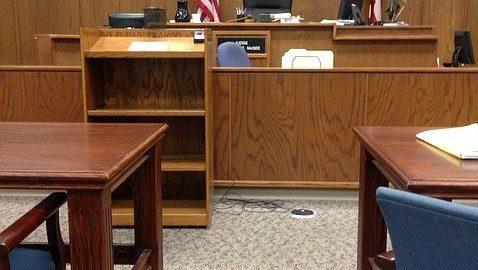
courthouse

Miami Divorce Courts During COVID-19

For updates visit Services and Court Status

As we all take care of ourselves and each other, Courts throughout the State prepare to continue serving the public in a way that is as safe as possible while doing their part to contain the spread of COVID-19.

Effective March 17, 2020, the Miami-Dade courts, including the Courthouse Center which is our family court, will be closed from March 17th through March 27, 2020 for all hearings except those deemed critical. This period of closure may be extended.

Critical cases include the following:

  • Bond hearing
  • Arraignment hearings where the defendant is in custody and there is no written plead; however, the defendant will not need to be present.
  • Hearings for Baker Act and Marchman Act (substance abuse)
  • Hearings for juvenile shelter and detention
  • Filing emergency petitions for temporary injunctions, including domestic violence, dating, stalking, repeat and sexual violence and for risk protection orders
  • Emergency hearing set by the presiding judge
  • Everything else that is already set for hearing will be continued to a later date.  If you have a hearing set during that time frame, check with your attorney.

Source: COVID-19 Advisory ##6, 8

Find more information specific to Florida and COVID-19 news visit FloridaHealth.gov.

children

Mental Health Tips to Help Your Family Deal with COVID-19 Worries

By now, we should be well aware of the precautions to minimize the spread of COVID-19.  We should also take steps to safeguard our mental health, including the mental health of children, who may only be aware of bits and pieces of the total story.

The best source for any reliable news are health organizations, not just for our physical health but also our mental health.

The CDC has a page dedicate to mental health and coping related to the virus.  It includes information for supporting yourself as well as for you to help your children.

Taking Care of Yourself

Not surprisingly, the CDC’s top tip for safeguarding your mental health is to limit your exposure to media coverage of the virus.  In journalism circles, the cliché about “if it bleeds, it leads” is true: the media will have a tendency to lead with stories that may garner the most clicks, views, and shares, but that may put an unnecessary bad spin on circumstances. 

While some of these news articles may be useful, they may give the impression of things being worse than they really are.  This is were real facts can put things in perspective.  So pay attention to the sources of news you read.

Be equally careful when reading source that disseminate conspiracy theories or negate the need to take precautions.  Just because someone doesn’t want things to be true, doesn’t mean that they are not true.

The CDC’s second suggestions is for you to get plenty of rest, eat healthy and exercise regularly.  These are things that we should do regardless of a pandemic, but they take on a special meaning because not only do they keep us healthy, but doing these normal things give us a sense of normalcy that may otherwise be missing given the current state of things.

Refer to the original CDC page on coping with COVID-19 or their main page on the Coronavirus Disease 2019 for more.

The World Health Organization (WHO) has published  a pamphlet (pdf) on Mental Health Considerations during COVID-19 Outbreak.

Helping Your Children Cope

As is frequently the case with children, they learn from us: parents, grandparents,  and other adults in their lives. Just as you may look for tips to help a child deal with divorce, you can find tips to help your children deal with what is going on right now.

However, each child is different, just like adults; and how they cope in dealing with this or any other situation has a lot to do with what they see us do.

Because each child will respond in their own way, the CDC gives you some things to watch out for, including:

·  Excessive crying and irritation

·  Returning to behaviors they have outgrown (e.g., toileting accidents or bed-wetting)

·  Excessive worry or sadness

·  Unhealthy eating or sleeping habits

·  Irritability and “acting out” behaviors

·  Poor school performance or avoiding school

·  Difficulty with attention and concentration

·  Avoidance of activities enjoyed in the past

·  Unexplained headaches or body pain

They also have suggestions for you to help and support your child.  This includes the same advise as to limiting exposure to media coverage of the event, and ensuring that children understand what they are hearing/reading on the news.

Like the CDC, the WHO’s pamphlet includes information on helping your children.

COVID-19 may be new, but our resilience is not.  We are—each of us and together—well equipped to deal with the virus if we deal with facts, prepare adequately, and address each challenge as they come, one day at a time.

divorce checklist

Divorce Checklist for a Contested Divorce

A divorce consultation checklist is good tool to help you prepare for a divorce.  A divorce consultation is all about information you need to provide the divorce lawyer, not necessarily about documents. A useful divorce consultation checklist will address financial information as well as issues related to children that you should be ready to discuss.

The idea here is for you to discuss finances and issues that you you must address. It is also a good tool to explore areas you may not have thought about.

Property and Financial Information in a Divorce

The financial side of your divorce is all about dividing the property accumulated during the marriage. It may also have to do with property either of you may have brought into the marriage, which you or your spouse may still have.

If there are going to be questions about alimony or child support, then it will also involve your current income, as well as that of your spouse.

If you have a prenuptial agreement, that document will be important for you to provide at the time of a consultation. You do not need to provide an original, a copy will be sufficient.  This is about the only document that you should bring with you to a consultation.

Property (assets) in a divorce is anything that you can own—whether it is owned in your name alone, in your spouse’s name alone or in joint names. 

Types of Property in a Divorce

Real property is usually what most people think about when they hear the word “property.”  But property also includes the following:

  • bank accounts, such as checking, savings, certificates of deposit, money markets, etc.
  • stocks and stock options
  • bonds
  • vehicles that are financed (not leased)
  • boats, RVs, jet skis
  • cash value in a life insurance
  • money that someone owes you
  • Retirement plans, such as profit sharing, pensions, IRAs, 401(ks), etc.
  • Investment accounts that are not for retirement
  • furniture in a home
  • Royalties
  • Business interests
  • Disability income

For purposes of a divorce in Florida, bank accounts are not just those accounts in your name alone, or in joint names with your spouse; but also includes accounts in your name and someone else’s name (other than your spouse).  Understand that this doesn’t necessarily mean that your spouse may have an interest in accounts held in your name and someone else (for example, a parent)—we are merely discussing what assets are titled in your name which may or may not be impacted by the divorce.

In addition to information on the above, you should be ready to provide information about tax filings: whether you and your spouse file jointly or as married filing separate.  If income has changed since the last tax filing, you should also be ready to discuss details.

Debt Information in a Divorce

As with property, you need to have an idea of what debt there is and how it is titled—in this case, who is responsible to the creditors for payment.

Similarly, it doesn’t matter that the debt is in your name, joint with your spouse or in your spouse’s name alone.  If the debt is only in your spouse’s name, you may not have access to the amount, repayment terms, etc., which is okay.  The important thing is that you know it exists and you can tell the divorce attorney about it.

Debt includes the following:

  • Mortgages, including second mortgages on the marital home
  • Credit card accounts
  • For vehicles, financed documents or lease documents
  • Personal loans
  • Money you owe but for which there is no document (like a loan from a relative)
  • Judgments against you which say you owe money to someone else
  • Loans you make have taken out against your retirement accounts
  • Tax debts
  • Business debt that you may owe, for example, if you own a business and co-signed for a loan for the business

Information about Children’s Issues

Each family is unique, so it is impossible to provide a list of every single issue that a family may face when they are about to go through a divorce.

Generally speaking, you should be ready to provide the attorney with a description of how each of you parent your children, both individually and jointly. This information would include how you divide the daily responsibility for caring for the children, taking your children to school (if of school age), participation in taking them to doctor’s appointments; how each of you discipline the children; what special issues your children may have, whether physical or otherwise, etc.

It is also a good idea to provide your attorney with your view of how each child relates to each of you.

If you and your spouse have already talked about a divorce, be ready to tell the attorney what discussions you’ve had regarding timesharing with the children in the event you do decide to go through the divorce.

If you have not discussed divorce, tell the attorney what you would like to see in terms of timesharing and why—what you want may be doable, but the attorney should discuss the possibility of you getting what you want within the current law regarding parental responsibility and timesharing.

Your Emotional Well-being

While we divorce lawyers are not therapists, we are nevertheless mindful that a divorce will impact our clients’ emotional wellbeing, at least in the short-term. Depending on where you find yourself in terms of accepting the divorce, your emotional condition may influence the divorce process to varying degrees.

Unresolved emotional issues may influence your ability to make decisions about children, property and debt within the facts of their case and the applicable law.  By way of example, some parents (fathers OR mothers) do not want their children to be around any future significant others of the other parent at any time. Depending on the circumstances, this position is most often not a realistic one.

Of course, the same applies to your spouse: their emotional condition and attitude towards getting a divorce will impact them and you as the divorce proceeds.

If there is a history of domestic violence, be prepared to tell the attorney.  However, depending on how you describe your relationship with your spouse, the attorney will most likely ask you about it.

Questions for your Divorce Lawyer

With all of the information above, you are ready to meet with a lawyer.  You can meet with a lawyer with very little of the above information.  But the consultation may not be as useful to you because you are not providing factual information that the lawyer can work with to provide you an overview of likely outcomes.

Some people do research for their divorce by a combination of a google search and talking to their friends and families about their own divorce.

There is a mix of information online, depending on the slant of the actual information you read.  Additionally, the experience of your family and friends in a divorce is not going to be the same for you—you and your spouse are unique as a couple, so whatever results your friends and families obtained is not going to be the rule for your own situation.

To prepare for a divorce consultation, you first should find out how long the consultation will last.  Some divorce attorneys provide 15-30 minutes consultation; other provide a longer one.

In addition, you should also start writing down questions that you want answers to—there is no such thing as a stupid questions, there is the question you have for which you need an answer.  So, write them down as you think about them, do not wait to be sitting in front of the attorney to come up with them.

Conclusion

This checklist may seem like quite a lot of work.  Contested divorces are in fact quite a lot of work for everyone involved.  It is better to be prepared from the start, and to know what are the possible outcomes.

If you anticipate a contested divorce and would like information about your individual case, you can set up a Case Assessment Session with me using this link, or calling me at 305-710-9419.


Happy Valentine's Day

Happy Valentine’s: Simple Celebrations of Love

We may automatically associate Valentine’s Day celebrations with romantic love, but celebrating love needs no pairing. 

Whether you’re single again (newly divorced), or just happy being single for the moment, Love needs no special day to be expressed to those around us: family, friends and co-workers or simply strangers for whom you do small acts of kindness—for example, consider making a donation to any cause you feel strongly about, here are some ideas:

  • Make-A-Wish America – giving children renewed strength to fight their illnesses, bringing families closer together and uniting entire communities.
  • Thorn – cutting edge programs that protect children from sexual abuse.
  • Best Friends – helping tens of thousands of homeless dogs and cats

If you want to check out any charity you are considering, visit Give.orgCharity Navigator or The IRS’  searchable database of charities.

should I get a divorce

Should I get a Divorce? What you should know

Couples may go through temporary separations as they work things out. When a separation lasts long, you begin to ask yourself, “Should I get a divorce?” It is understandable to try to delay dissolving the marriage; it feels less messy emotionally.  But putting off a divorce may have unintended legal consequences as you try to move on with your life.

When the separation runs into years and you lose track of your spouse, the process of getting a divorce may complicate your ability to go on with your life as if you were single.

Unintended consequences of not getting divorced

Regardless of whether you know where your spouse is, here are some surprising results about a lengthy separation when neither of you intend to continue being married:

  • Buying a Home: In Florida, if you want to buy a home and are married, your spouse will have to sign the mortgage. This isn’t a problem as to buying a home if you are paying for the home cash. But if you have to finance your home, your closing may be delayed since you have to either find your spouse or get the divorce done.
  • Getting Remarried: Remarrying while still being married to someone else is called bigamy, which is a crime; and your new marriage is void from the beginning. Beyond the fact that it is a crime, do you really want to start your new marriage while still married to someone else? New spouses are rarely understanding of this fact.
  • Setting a Wedding Date: Related to the second point, above, is setting a marriage date for your new marriage while still being married to someone you can’t find. there is no way to shorten the time required to do a search to find your spouse, or the time set by the Court for your spouse to answer when the divorce is done by publication.
  • Inheriting Your Estate: People who are married have a right in the estate of a spouse who passes away, regardless of whether they are still living together. At a minimum, your heirs will have to fight your spouse; and in the worst case scenario, your spouse may walk away with property you accumulated between the date of separation and the date of you passed away.
  • Having Your Spouse Claim Property: In many instances, your spouse can claim a share in property you have accumulated since the separation. In Florida, there is no legal separation that automatically happens simply because you and your spouse have decided to separation. There is either marriage with a pre-nuptial or post-nuptial agreement, or a dissolution. But it is a myth to think that just because you are no longer living as spouses, that you are “legally” separated. Without a pre-nuptial or a post-nuptial agreement, all property you accumulate–think retirement plans, investments, small business, savings ccount, etc– after you separated but before a divorce is property that is subject to being divided by the Court.

Explore your options to better answer the dreaded Should I get a Divorce Question

Only you can decide whether dissolving your marriage is right for you.

You have many options to choose from. A good starting point is marriage counseling if you’re not sure that you are ready to get a divorce.

If marriage counseling doesn’t seem to work, you have other options to conclude this phase of your life. You can speak to your spouse about an uncontested divorce.  If that doesn’t work, get a case assessment session that answers all your questions, including options for getting a divorced when your spouse will not cooperate with you. Lastly, if you’ve lost touch with your spouse and don’t know where they are, you can do a divorce by publication.

Don’t put off your divorce any longer simply because you think it will be a hassle to get it done.

If you have questions about your divorce, or if you’re ready to begin the process, call me today at 305-710-9419.  You can also, complete this request form and let me know the best time to call you.

phone scammer

Safeguard Your Tax Refund-Calls to Steal Your SSN

We all have a love/hate relationship with April 15th: we hate preparing for it, we LOVE the refund if we are due one. Make sure you get your refund by keeping yourself safe from scams to get your social security number.

The latest scam involves calls from the Social Security Administration and relate to your social security number, which will unlock your tax information and put your refund and identity at risk.  Here are resources for you to stay informed and make sure no one get your money.

Thieves are ingenious at coming up with ways to use old and new technology to rob you of your money and any information that may lead them to it. A couple of years or so ago, it was calls from the IRS, calls from the FBI, etc., threatening you with “the cops” picking you up if you didn’t call them back. 

It’s just another variation on the same theme: getting your information.   But scammers do it because enough people fall for it that its worth their time.

According to the Social Security Administration, the way to protect yourself is:

Visit their site, where you can watch a short video summarizing the scams, see the most recent press release regarding the social security phone scams, and get tips on protecting your information.

It’s unfortunate that besides working hard for your money, you need to work hard to keep it and the information that leads to it safe.  Fortunately, there are plenty of resources to keep yourself informed and do just that.

Browse other pages on the MiamiDivorceBlog or visit the site’s Free Downloads page.